Designing with Plant Communities: A Smarter Way to Build Resilient Colorado Landscapes
One of the most effective (and often overlooked) approaches to landscape design is thinking in terms of plant communities rather than individual plants.
In nature, plants rarely grow alone. They exist in relationships: sharing soil conditions, water patterns, root interactions, pollinators, seasonal timing, and microclimates. A foothills meadow, riparian corridor, or shortgrass prairie isn’t a random collection of species; it’s a living community shaped by place and ecology over time.
When we design landscapes with plants that naturally coexist or thrive under similar conditions, we create gardens that are more resilient, functional, and ecologically supportive.
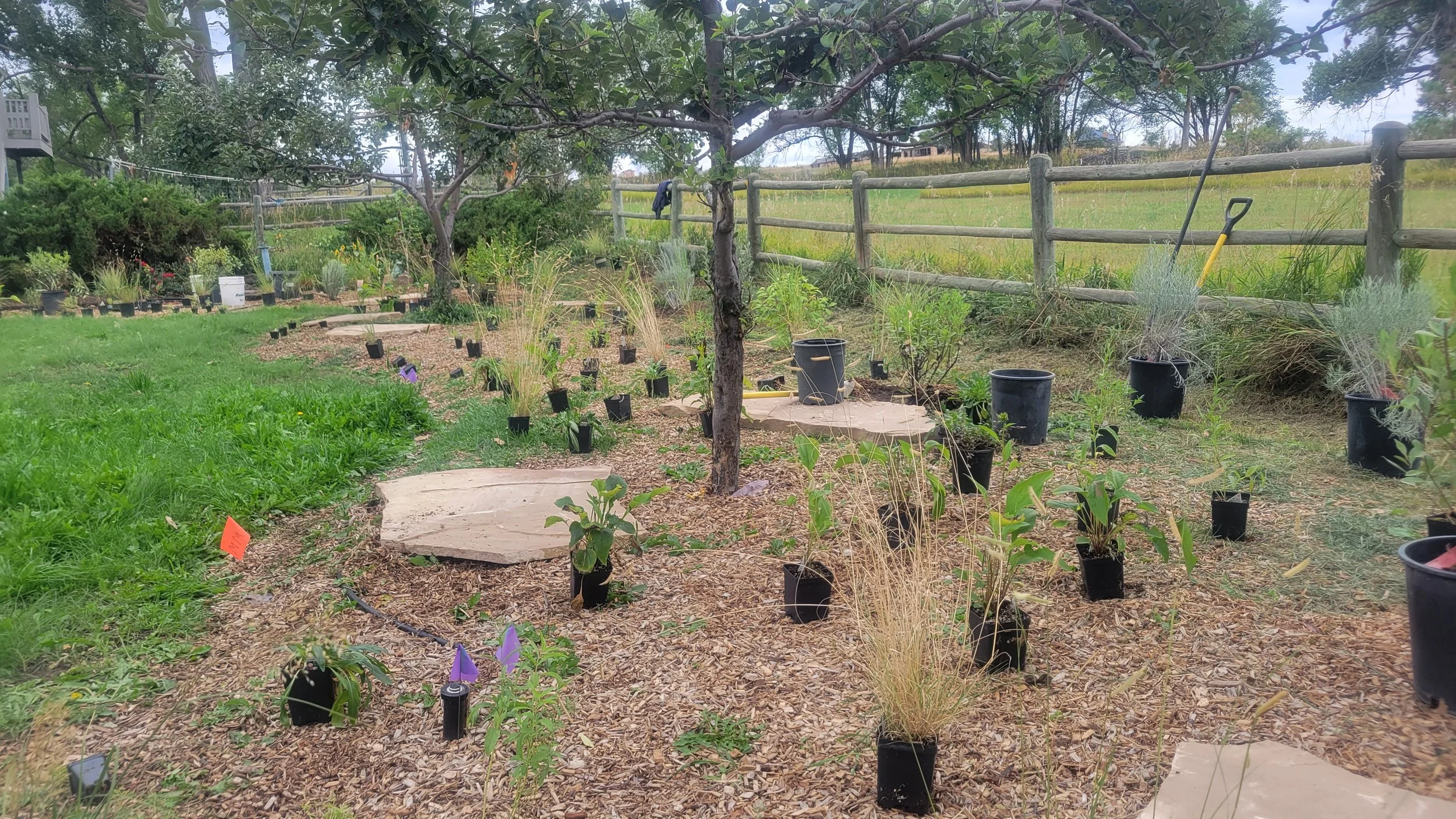
A plant community waiting to be installed in a Northern Colroado backyard.
What Is a Plant Community?
A plant community is a group of plants that naturally occur together because they share similar environmental needs and ecological relationships.
That doesn’t mean every landscape must become a strict native ecosystem restoration project. In residential design, plant community-inspired palettes can include:
Native species that naturally grow together
Adapted plants from similar climates
Plants with shared water, soil, and sun requirements
Species that support compatible pollinators and wildlife
The goal is to create a landscape that functions more like a healthy ecosystem and less like a collection of isolated specimens requiring constant intervention.
Why This Strategy Works
Lower Water Use
Plants adapted to the same conditions tend to have similar irrigation needs. Instead of forcing thirsty plants and drought-tolerant plants into the same bed, grouping compatible species makes watering more efficient and reduces stress on plants.
In Northern Colorado towns like Fort Collins, Loveland, Windsor, and Timnath, where water conservation is increasingly important, this is especially relevant.
Healthier, More Resilient Landscapes
Plant communities often develop layered relationships under- and above ground:
Diverse root depths improve soil structure
Dense plantings shade the soil and reduce evaporation
Seasonal succession supports pollinators over longer periods
Biodiversity reduces vulnerability to pests and disease
Instead of constantly correcting problems, homeowners can create systems that stabilize themselves over time.
Better Habitat Support
Pollinators, birds, and beneficial insects evolved alongside specific plant communities. When landscapes mimic those ecological patterns, they provide more meaningful habitat than isolated ornamental plants.

Purple coneflower and blazing star may not naturally grow side by side in the wild, but they both thrive in similar sunny, well-drained conditions, making them a beautiful and ecologically supportive pairing in pollinator-friendly, prairie-inspired gardens.
Plant Community Ideas for Northern Colorado Landscapes
Shortgrass Prairie-Inspired Planting
This palette works well in hot, sunny areas with lean soils and minimal irrigation.
Possible combinations:
Blue grama (Bouteloua gracilis)
Little bluestem (Schizachyrium scoparium)
Purple prairie clover (Dalea purpurea)
Blanketflower (Gaillardia aristata)
Prairie coneflower (Ratibida columnifera)
Rocky Mountain penstemon (Penstemon strictus)
These plants thrive together because they evolved under similar moisture and temperature conditions along the Front Range.
Foothills Shrubland Community
Ideal for transitions, dry slopes, and naturalistic landscapes.
Possible combination:
Rabbitbrush (Ericameria nauseosa)
Threeleaf sumac (Rhus trilobata)
Apache plume (Fallugia paradoxa)
Sulphurflower buckwheat (Eriogonum umbellatum)
Firecracker penstemon (Penstemon eatonii)
This type of palette creates structure, seasonal blooms, wildlife habitat, and excellent drought tolerance.
Rain Garden Community
For lower areas, downspouts, or places where water naturally collects.
Possible combination:
Beebalm (Monarda fistulosa)
Goldenrod (Solidago sp.)
Harebells (Campanula rotundifolia)
Prairie Smoke (Geum triflorum)
Purple Coneflower (Echinacea purpurea)
Grouping species that can handle moisture influxes together allows these areas to function more effectively while supporting birds and pollinators.
Designing for Relationship, Not Just Appearance
Traditional landscaping often treats plants as isolated decorative objects. Plant community design shifts the focus toward relationships:
How plants support one another
How landscapes interact with water and soil
How seasonal rhythms unfold
How humans participate in local ecosystems
The result is often a landscape that feels more grounded, dynamic, and alive.
And, practically speaking, homeowners frequently find that these landscapes become easier to maintain over time because the design aligns with natural systems rather than constantly fighting them.
In a place like Northern Colorado, where water conservation, biodiversity, and climate resilience matter more every year, designing with plant communities offers a pathway toward landscapes that are not only beautiful but deeply functional and ecologically connected.