12 Top Perennials and Grasses for Sustainable Colorado Landscapes that We Reach for Again and Again
If you've ever asked us for a list of our favorite plants, you might expect a neat "Top 10." We tried. Every time we narrowed the list, another essential plant demanded a spot. Some bring structure. Others feed pollinators. Some are the quiet workhorses that hold an entire planting together. We simply couldn't leave them behind. Instead, here are our Top 12 perennials and ornamental grasses: the plants we return to again and again when designing resilient, beautiful landscapes throughout Colorado. These aren't trendy plants; they're dependable performers that provide season-long interest, support wildlife, conserve water, and create gardens that become more beautiful with time.

1. Blue Grama Grass (Bouteloua gracilis)
If there were an official grass of Colorado landscapes, Blue Grama would be a strong contender.
This iconic native grass is instantly recognizable by its distinctive eyelash-shaped seed heads that seem to float above the foliage in late summer. As a dominant grass of the shortgrass prairie, it's incredibly well adapted to Colorado's climate and one of the most drought-tolerant grasses you can grow.
Blue Grama greens up early in spring, then transitions to warm golden tones in autumn, providing interest long after many perennials have finished blooming.
Whether planted as a groundcover, woven throughout perennial beds, or massed in naturalistic plantings, its fine texture complements nearly every flowering plant in the landscape.
Why we love it: Exceptional drought tolerance, native habitat value, four-season interest, and effortless compatibility with almost any planting design.
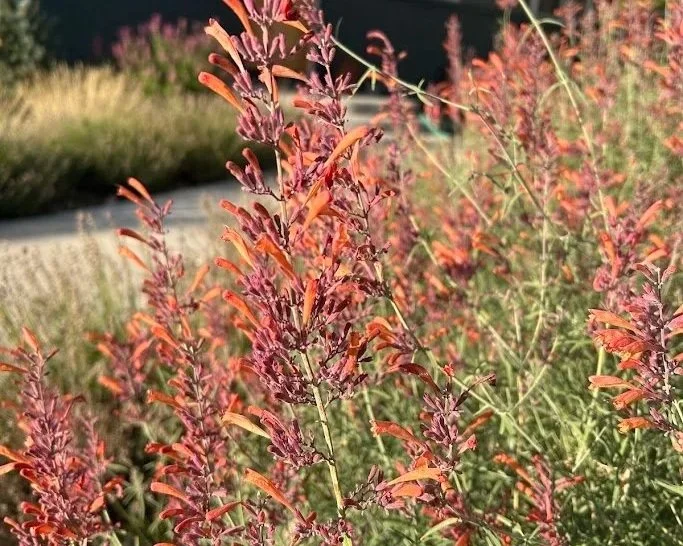
2. Sunset Hyssop (Agastache rupestris)
Few plants bring as much color and movement to the late summer garden as Sunset Hyssop.
Its vibrant orange tubular flowers glow against the fine, aromatic foliage, attracting hummingbirds, butterflies, native bees, and countless other pollinators. Blooming from midsummer well into fall, it provides one of the longest floral displays of any drought-tolerant perennial.
The soft gray-green foliage carries a pleasant minty fragrance, adding another sensory layer to the garden.
Why we love it: Brilliant color, exceptional pollinator activity, long bloom season, and outstanding heat and drought tolerance.
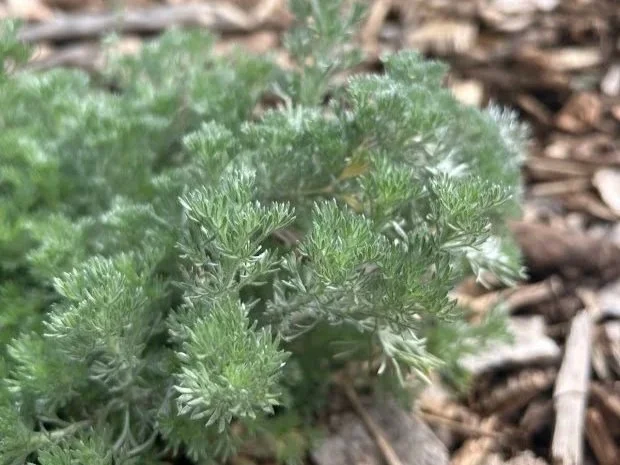
3. Fringe Sage (Artemisia frigida)
Not every great landscape plant needs showy flowers. Fringe Sage provides something just as valuable: texture, fragrance, silvery color, and year-round structure. Its finely divided silver foliage creates beautiful contrast against green grasses and colorful blooms while reflecting sunlight during Colorado's hottest months.
As a native prairie species, it thrives in lean soils and dry conditions where many ornamental plants struggle.
Why we love it: Soft silver texture, drought resilience, aromatic foliage, and year-round visual interest.
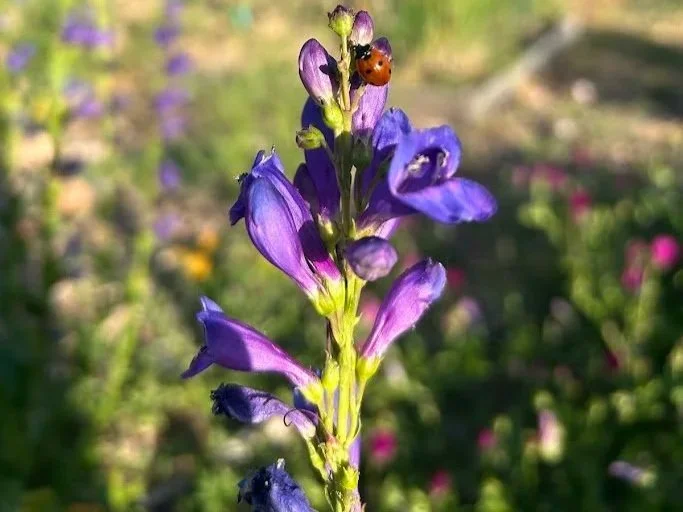
4. Rocky Mountain Penstemon (Penstemon strictus)
A true Colorado classic with upright stems of deep violet-blue flowers that rise above glossy evergreen foliage in early summer, creating one of the season's most dramatic displays. Hummingbirds flock to the blooms, while native bees eagerly visit throughout the flowering period.
Unlike many perennials that disappear after bloom, Rocky Mountain Penstemon maintains attractive evergreen basal foliage throughout much of the year.
Why we love it: Bold native color, evergreen presence, pollinator value, and dependable performance.
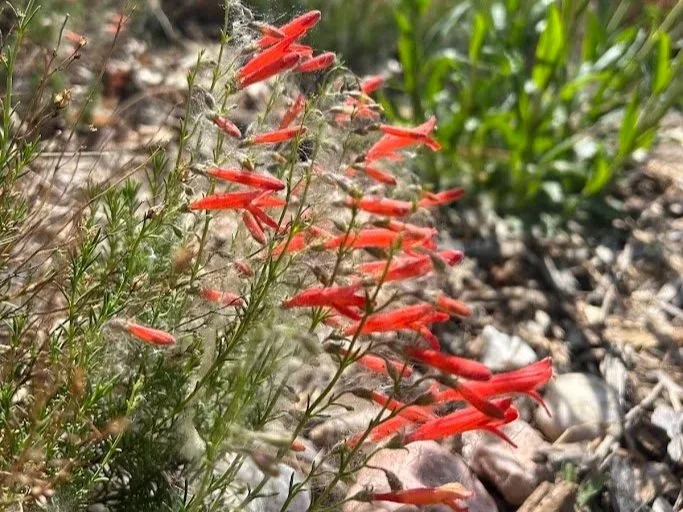
5. Pineleaf Penstemon (Penstemon pinifolius)
Pineleaf Penstemon forms tidy mounds of evergreen, needle-like foliage that resemble miniature conifers. Throughout summer, the plants become covered in brilliant orange-red tubular flowers that hummingbirds can't resist.
Its compact size makes it perfect along pathways, rock gardens, retaining walls, and the front of planting beds.
Why we love it: Compact habit, evergreen texture, extended bloom time, and hummingbird appeal.
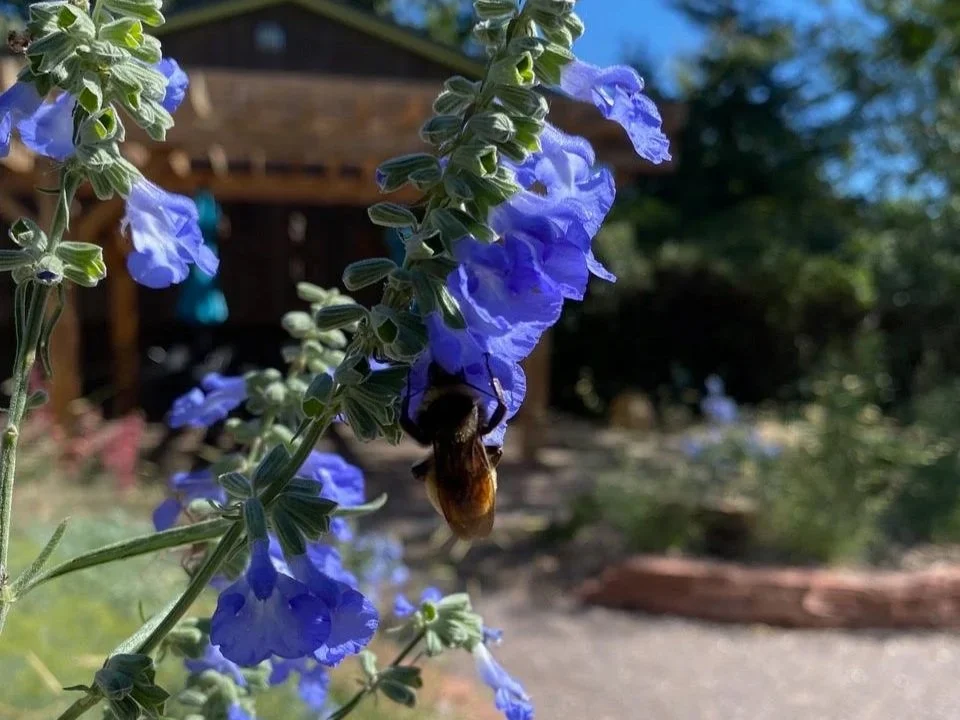
6. Pitcher Sage (Salvia azurea var. grandiflora)
Late-season color can be difficult to find in water-wise landscapes, but Pitcher Sage solves that problem beautifully. Tall stems topped with sky-blue flowers sway above surrounding plants from late summer into fall, providing valuable nectar when many earlier bloomers have faded.
Despite its delicate appearance, this native salvia is remarkably tough.
Why we love it: Rare late-season blue flowers, graceful movement, excellent pollinator support, and drought tolerance.
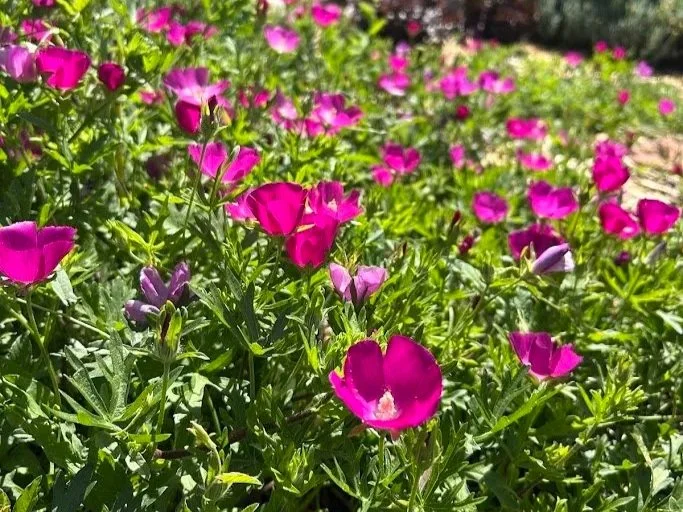
7. Prairie Winecups (Callirhoe involucrata)
Every garden needs a plant that spills gracefully over walls, softens pathways, or fills difficult spaces.
Prairie Winecups do all of that while producing brilliant magenta cup-shaped flowers for months on end. Its low-growing habit creates an attractive living mulch that shades the soil and reduces weed pressure.
Why we love it: Long bloom period, excellent groundcover, vivid color, and outstanding durability.
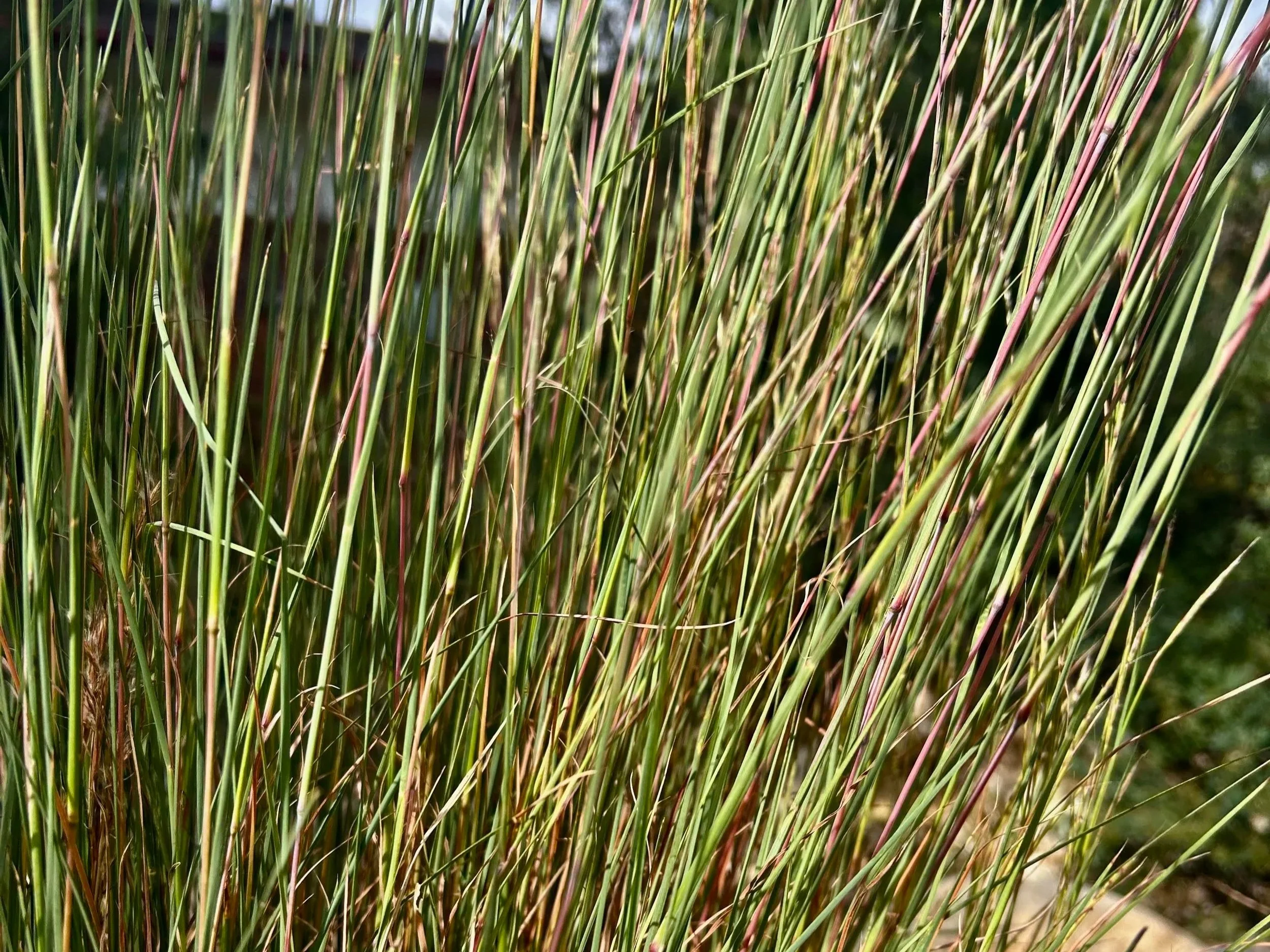
8. Little Bluestem (Schizachyrium scoparium)
Few grasses transform as dramatically through the seasons.
Blue-green foliage emerges in spring before shifting through shades of copper, burgundy, orange, and deep bronze in autumn. The upright form catches morning and evening light beautifully, while fluffy seed heads persist into winter.
Beyond its beauty, Little Bluestem provides nesting habitat, food for birds, and exceptional structure throughout the dormant season.
Why we love it: Incredible seasonal color, winter interest, wildlife value, and architectural form.
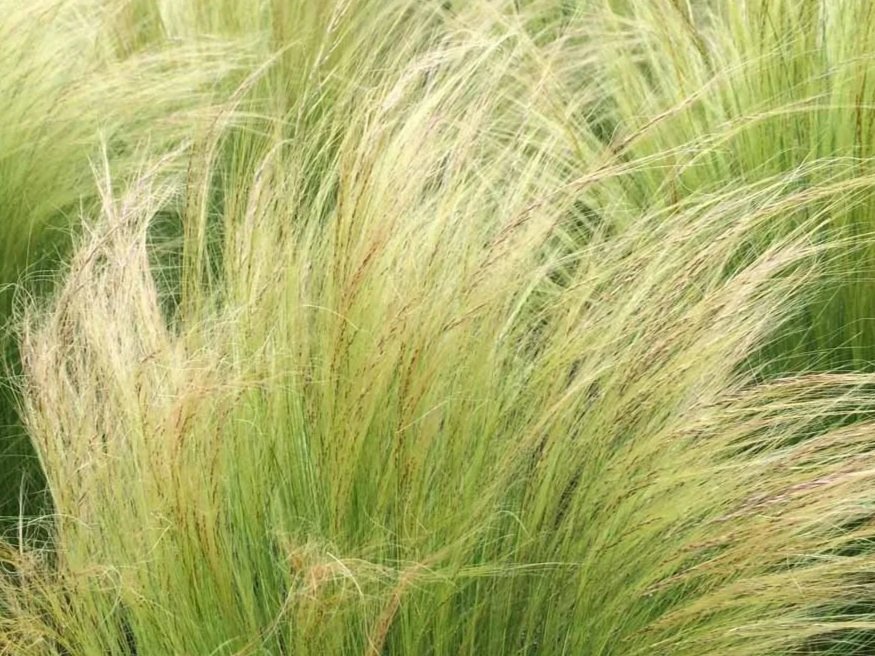
9. Mexican Feather Grass (Nassella tenuissima)
Movement brings dynamic movement to a landscape, and Mexican Feather Grass responds to the slightest breeze, creating soft waves that contrast beautifully with bolder shrubs and upright perennials. Its delicate texture helps unify plantings while adding an airy, naturalistic feel.
Because it self-seeds in some climates, placement and maintenance are always considered during design.
Why we love it: Fine texture, graceful movement, and beautiful contrast with larger plants.
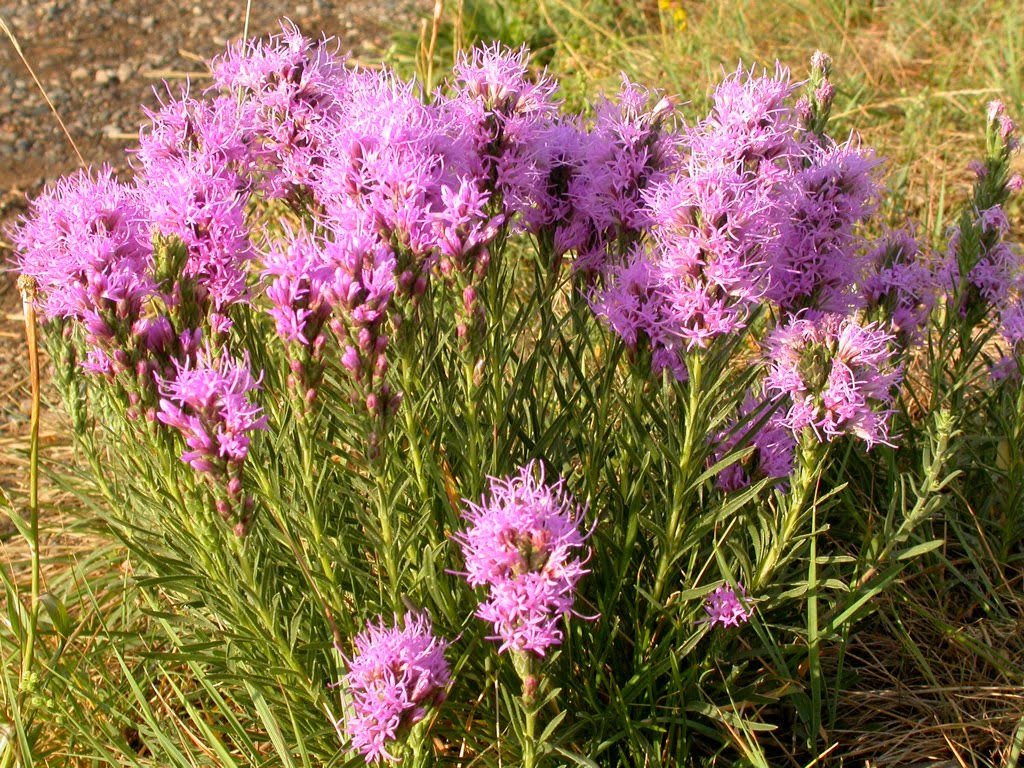
10. Dotted Blazing Star (Liatris punctata)
Dotted Blazing Star waits patiently through summer before delivering one of the season's most spectacular pollinator displays. Dense spikes of rosy-purple flowers attract butterflies, bees, beneficial insects, and migrating monarchs at a time when nectar sources become increasingly important. Its deep taproot also makes it exceptionally drought-resilient.
Why we love it: Outstanding pollinator value, late-season blooms, drought resistance, and vertical interest.
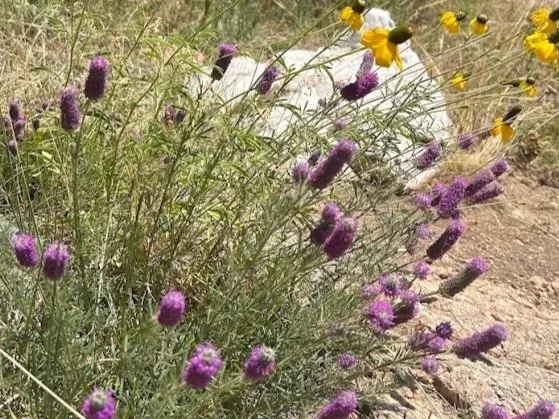
11. Purple Prairie Clover (Dalea purpurea)
Purple Prairie Clover is one of those understated plants that supports an incredible amount of life. Its unique cylindrical flower heads bloom gradually from the bottom upward, extending the flowering season while attracting dozens of native bee species and butterflies.
As a nitrogen-fixing native legume, it also improves soil health over time.
Why we love it: Pollinator powerhouse, soil-building benefits, elegant texture, and prairie authenticity.
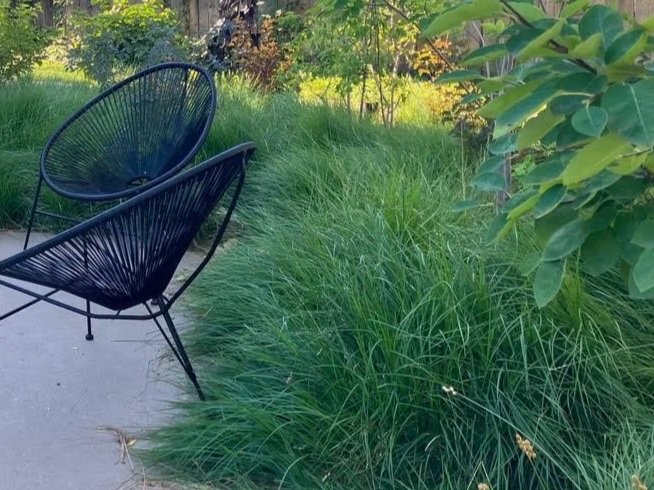
12. Plains Oval Sedge (Carex brevior)
Often overlooked, sedges may be some of the most versatile plants available, especially for part-shade gardens. Plains Oval Sedge provides a soft, fine-textured ground layer that thrives in a wider range of conditions than many traditional turf grasses. It's an excellent choice for naturalized areas, rain gardens, woodland edges, and low-maintenance landscapes where ecological function is just as important as appearance.
Why we love it: Adaptability, habitat value, soft texture, and an excellent alternative to traditional lawn grasses.
More Than Great Plants
These 13 plants have earned a permanent place on our favorites list because they consistently perform well in Colorado landscapes. Together, they provide color and interest from spring through fall, support pollinators and birds, add texture and movement, and use far less water than traditional landscapes once they're established. We regularly include them in our designs because they're beautiful, dependable, and work well together. Whether you're starting a new landscape or updating an existing garden, these are some of the best plants to build around.
Photos by Emily Reeves, True Nature Gardens; Derek Brandt, Habitat Guild; and Emily Goldman, Emily Goldman Design